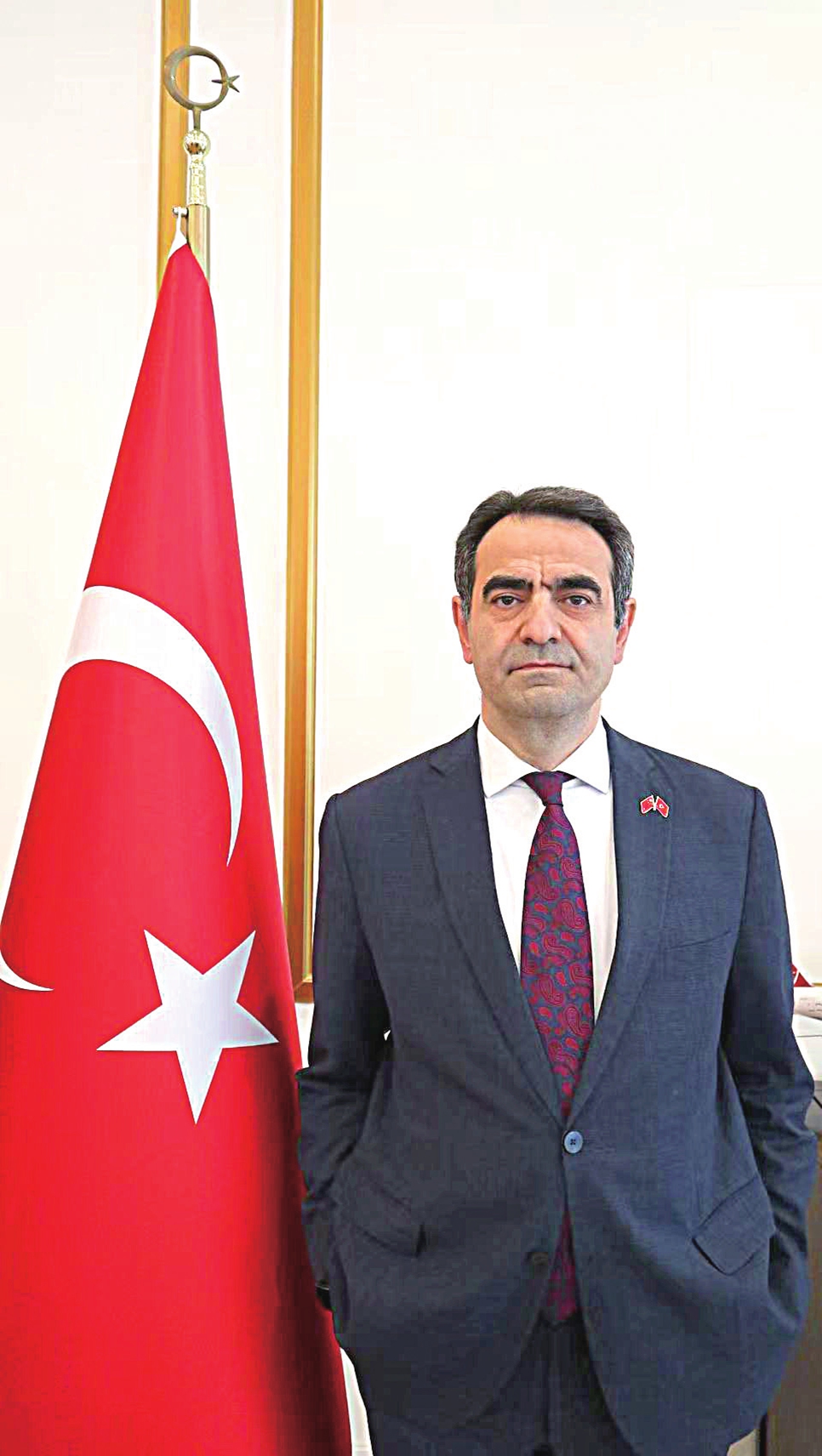
Selçuk Ünal, Ambassador of Türkiye to China Photo: Courtesy of the Embassy of the Republic of Türkiye in ChinaThis year marks the 55th anniversary of the establishment of diplomatic relations between Türkiye and China. The two countries share a long history of friendly exchanges. The ancient Silk Road linked the millennia-long history of mutual learning and people-to-people exchanges of the two sides, forging a profound foundation for the friendship between Türkiye and China. Since modern times, both countries have undergone profound changes and social transformations. Their similar historical experiences have fostered mutual understanding. Upholding their longstanding tradition of friendship, bilateral relations between Türkiye and China have steadily advanced. The two countries formally established diplomatic relations in 1971, opening a new chapter in the development of bilateral ties. High-level strategic guidance is the fundamental guarantee for the steady and long-term development of Türkiye-China relations. The two heads of state attach great importance to bilateral relations and are committed to continuously enhancing the quality and level of friendly cooperation between Türkiye and China, having built consensus through multiple meetings. The meeting between the two leaders in Tianjin during the Shanghai Cooperation Organization Summit on August 31, 2025, which charted the course for the development of bilateral relations, serves as powerful proof of their sustained high-level dialogue. Türkiye consistently and firmly adheres to the one-China principle and supports China in safeguarding its national sovereignty and territorial integrity. Under the joint guidance of the two heads of state, practical economic and trade cooperation between Türkiye and China has continued to develop. Cooperation on connectivity has deepened and yielded tangible results, with active efforts to align Türkiye's Middle Corridor Initiative with the Belt and Road Initiative.
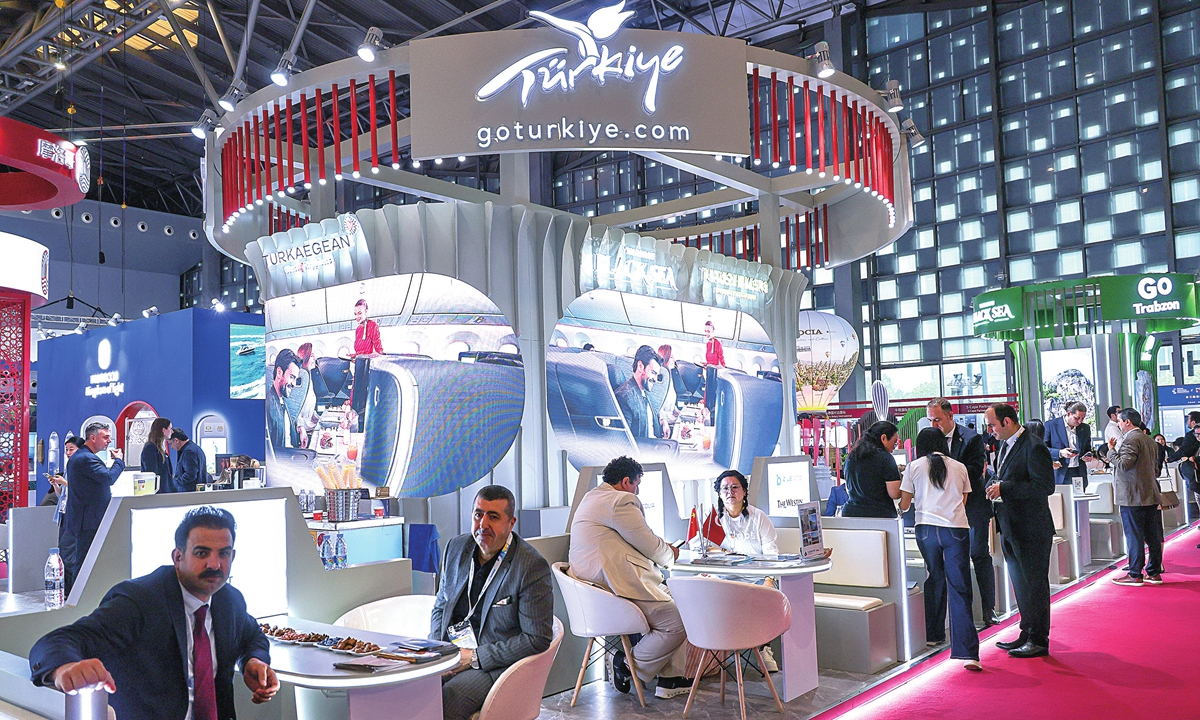
A Türkiye Tourism booth at the ITB China 2026, one of the most influential tourism trade platforms in the Asia-Pacific region, in Shanghai on May 26, 2026 Photo: VCGThe scope of cooperation has steadily expanded - extending from traditional trade to areas such as trade security, the stability of industrial and supply chains, energy corridor construction, and digital connectivity - thereby creating a comprehensive, multi-tiered cooperation framework that injects momentum into shared regional development. Over the past two decades, the volume of bilateral trade has grown approximately 40-fold, cross-border transport projects have increased, two-way investment has steadily expanded, and the areas of cooperation have broadened, all demonstrating the enduring resilience and vitality of this economic and trade partnership. At present, there is still significant untapped potential for cooperation between Türkiye and China. By expanding two-way investment, optimizing trade structures, and broadening areas of collaboration, the two nations can foster a more balanced, diversified, and mutually beneficial economic and trade landscape, thereby fully unlocking this potential. In this vein, high-quality direct investments from China into our country will create a true win-win foundation for the sustainability of our economic relations, while offering Chinese companies significant advantages in terms of access to markets adjacent to Türkiye, achieving shared success. People-to-people exchanges form a vital foundation of public support for the development of relations between Türkiye and China, with tourism being the strongest point of convergence in people-to-people ties. In 2026, frequency of direct flights has increased to 56 times per week, strengthen direct connections for tourism, trade and business. Our decision, on the occasion of the 55th anniversary, to grant visa exemptions to Chinese citizens for touristic travel and transit - effective January 2, 2026 - fully demonstrates our strong commitment to increasing people-to-people contacts. Today, our world is undergoing profound changes, with instabilities and uncertainties on a rise. Türkiye and China stand as two ancient civilizations that are influential in the region. Türkiye is committed to multilateralism and keeps strengthening its relations with China. Against the backdrop of complex and profound shifts in the international landscape, enhancing bilateral dialogue and cooperation is more important than ever, and the Türkiye-China relations rest on a solid foundation for continued development. At the new starting point marked by the 55th anniversary of Türkiye-China ties, what needs to be done today is to translate political will into more concrete projects, efficient mechanisms and active private sector participation, thereby deepening and solidifying cooperation across different fields. We look forward to taking this occasion as an opportunity to join hands with China to forge a brighter future for bilateral relations. The author is Turkish Ambassador to China 。
B | 在WRC上,智平方展示的,就是这样一个面向工业产线的应用场景。类似的变化,也出现在机器人的使用方。京东零售具身智能业务负责人郑小丹告诉财联社记者,从去年到今年,已经有大量面向实际应用的机器人场景出现,包括工业场景、零售场景、健康场景,以及一些半商业化场景。不过,“机器人要更快进入千行百业,走进千家万户,仅靠好的本体和模型是不够的,还需要进入真实场景持续验证和优化。”郑小丹表示。企业开始集中强调“上岗”,也意味着行业评价标准正在变化。跃迁联盟、机器人之家联合创始人梦雯在此次WRC第十届具身纪元·智创百家论坛上给出的判断是,此前行业容易被机器人的外观和舞台动作吸引,但进⼊ 2026 年下半年,市场越来越关注另外三件事:真机⻓期连续作业稳定性、⼯业客户复购转化率和全链路投资回报率(ROI)。延伸到产业链上游,一个形态上直接的变化则是为人形机器人行业将零部件“做小”。上游零部件企业诺仕机器人创始人徐杨认为,机械零部件行业具有较强的技术积累属性,但人形机器人的发展并未完全改变原有的机械制造体系。相比传统应用,人形机器人对核心零部件、模组小型化提出了要求,不过其底层技术和制造逻辑并未发生根本变化。
C | 其在此次WRC上展示的1.5mm微型行星滚柱丝杠及灵巧手全套微型电缸模组(PWG系列)便意在适配灵巧手拇指、指节、手指独立驱动,可完成捏取小物件、旋转钥匙等精细动作。
D | 不过,有“岗位”,并不意味着机器人目前已经能够完全胜任岗位。
E | 徐杨告诉财联社记者,目前大量工业、服务场景仍主要由人工完成,人形机器人要真正进入这些领域,仍需在产品能力和运行稳定性上持续迭代。也正因如此,往上游产业链延伸,现阶段整机厂对上游零部件企业提出的要求,也更多集中在扩大产能和降低价格,尚未普遍进入对精度、寿命等指标进行严格验证的阶段。埃夫特&启智董事长兼总经理游玮也表示,目前机器人厂商已经有了干活的意识,但真干活和干真活还需考虑很多因素,如节拍、准确率和泛化能力,“其实这三个成本约束的条件下是不可能三角,在现场很多情况下某一个点上可能非常突出,但是没有考虑到全局的平衡,所以在客户眼里可能难交付。”这也体现在下游需求结构上。
F | 根据宇树科技对上交所问询函的回复,2025年前三季度,公司人形机器人收入中,科研教育占比73.6%,商业消费占17.39%,行业应用占9.01%。中研普华研究员李芬珍子向财联社记者表示,剔除车企自用迭代、高校及科研机构的研发采购订单后,人形机器人真实外部商业量产订单占比低。当前行业多数出货用于技术迭代、算法训练和场景测试,属于内部生态循环与科研投入,整体来看,人形机器人商业化落地仍处于初级验证阶段,具备真实商业成色的规模化量产订单较为稀缺。另一个原因在于成本。受访人士普遍认为,目前人形机器人尚未普遍形成对人工的优势。“目前,人形机器人全生命周期综合成本仍显著高于传统人工,包含硬件采购、场景适配、运维检修和意外停机损耗等成本。”李芬珍子表示,现阶段人形机器人整机售价偏高,核心零部件未形成规模化降本,加上工业场景适配调试周期长、运维成本高,仅超高负荷连续作业场景可小幅缩小成本差距。两条腿,还是几个轮子?当人形机器人开始强调上岗与落地后,另一个问题开始变得现实:它究竟应该长成什么样?眼下,双足双臂人形机器人和轮式底盘双臂机器人的技术之争已经打响。
G | 在具身智能走向产业落地的过程中,机器人形态的选择首先取决于制造现场的实际作业需求。目前,能够率先实现量产交付的场景多集中在工业制造与仓储物流端,在这些以平整地面为主的结构化车间里,轮式设备成为更务实的选择。拓斯达(300607.SZ)轻负载工业机器人出货量位居中国第一。
H | 该公司此前在接受财联社记者采访时介绍,其工业客户此前考察了数十家机器人供应商,最终进入下一轮评估的两家厂商全部采用轮式底盘。这一选择的核心原因在于安全性,在精密制造车间内,单件物料价值常达数万元,双足机器人一旦断电或系统故障,整机倒地容易砸损物料和产线;轮式设备遇到故障则停在原地,不会引发次生损坏。去年开始,陆续有轮式双臂机器人接到工厂实训订单的消息。
I | 智元机器人A2-W、银河通用Galbot S1、智平方AlphaBot2等多款轮式双臂机器人先后宣布了在富临精工(300432.SZ)、宁德时代(300750.SZ)、惠科股份(001399.SZ)等国内头部工厂“上岗”的消息。半山创投董事长戴福全告诉财联社记者,在平整、改造完善的标准厂房内,绝大多数工位上,轮式双臂和固定协作机械臂的性价比、稳定性与运维成本全面优于双足人形,其移动速度更快、能耗更低、平衡控制难度更小,回本周期也更短。高工机器人研究所所长蔡炳贞也向财联社记者表示,轮式设备在行业内公认会率先落地。与此同时,轮式人形机器人的成本也更低。海通证券研报表示,由于本身的结构设计已具备稳定性,轮式机器人可以减少零部件的使用并降低模型维度,降低整体制造成本;同等身高下,双足的BOM成本比轮式底盘高十倍。在运维方面,双足机器人更需人类辅助,目前未能实现和工人相当的工作效率,并且不少机器人还需绳索辅助行走,这些必要的安全措施提高了运维成本;而轮式机器人凭借更高的稳定性,可以减少维护和修理成本。工厂暂时偏向轮式形态,并不意味着双足人形失去了存在的合理性。
K | 底层技术吸引8成投资2025年一直被视作人形机器人的爆发元年。这一年,人形机器人开始大规模走进普通人的视野之中,同样也在当年吸引了大量的投资。根据量子位智库数据,2025年,具身智能赛道的全年投资事件从2024年的173起暴涨至447起,涌入资本总量从137亿飙升至554亿,增长分别超250%和400%。今年,相比于去年的狂热,具身智能赛道开始出现更多质疑声音,关于落地场景、落地形态的争议不绝于耳,这一赛道的投资热情是否亦趋冷?事实并非如此。IT桔子数据显示,2026年上半年,国内具身智能赛道融资322笔、总额935亿元,较2025年同期暴涨5倍,半年就超过了2025年全年570亿的规模。戴福全向记者表示:“我觉得整体投融资热度没有降温,但投资逻辑已经发生根本性切换,从两年前‘看样机、赌整机故事’的普炒阶段,进入‘重订单、重量产兑现、重核心供应链’的理性深耕期。”“两年前只要能做出行走原型机,就能拿到融资;到2026下半年,资本不再愿意单纯为演示效果买单,能不能拿到小批量商业化订单、良率能不能持续提升、成本有没有持续下探空间,是投前最核心的考核标尺。
L | 头部整机依然能拿到大额产业资本、地方国资加持,但大量没有落地能力的新整机项目融资难度明显加大,行业出现显著分化。”戴福全说。谈及机器人行业的融资方向变化,徐杨表示,在本体企业已获得大量资本投入、头部企业估值走高的背景下,部分投资机构正将目光由整机端向上游核心零部件延伸。目前,人形机器人三大核心零部件量产水平呈现差异化格局,国产化进度与良品率参差不齐。
N | 大量的融资之后,规模化的落地就是下一步。蔡炳贞告诉记者,人形机器人的规模化落地预计分三步推进,较为短期的第一阶段,主要应用于巡检、上下料、物料搬运等弱工艺、高容错率场景,预计将在3年内率先实现规模化落地;中期阶段,将应用于物流包裹分拣场景等,即虽然该场景对容错率仍有一定包容度,但对非标物料的操作泛化性要求更高;第三阶段也就是长期阶段,将应用于对工艺精度、节拍和ROI有严格要求的强工艺工业制造场景。