
盾牌
AI opens new creative doors, raises new concerns across China’s screen industry_我的网站

A |
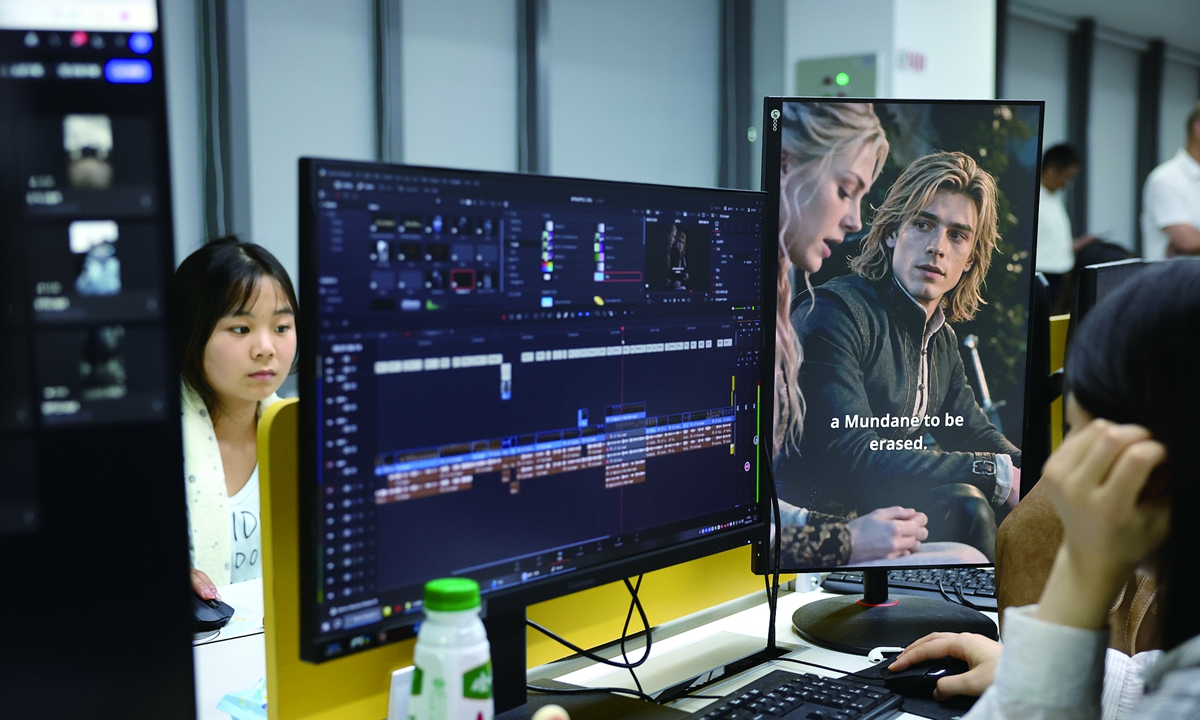
Open Douyin, the Chinese version of TikTok, and AI-generated short dramas are hard to miss.
The stories span almost every genre familiar to Chinese audiences, from fantasy and immortal cultivation to urban romance and period tales.
The biggest difference is that the actors, settings and even many of the visual elements are generated by artificial intelligence (AI).
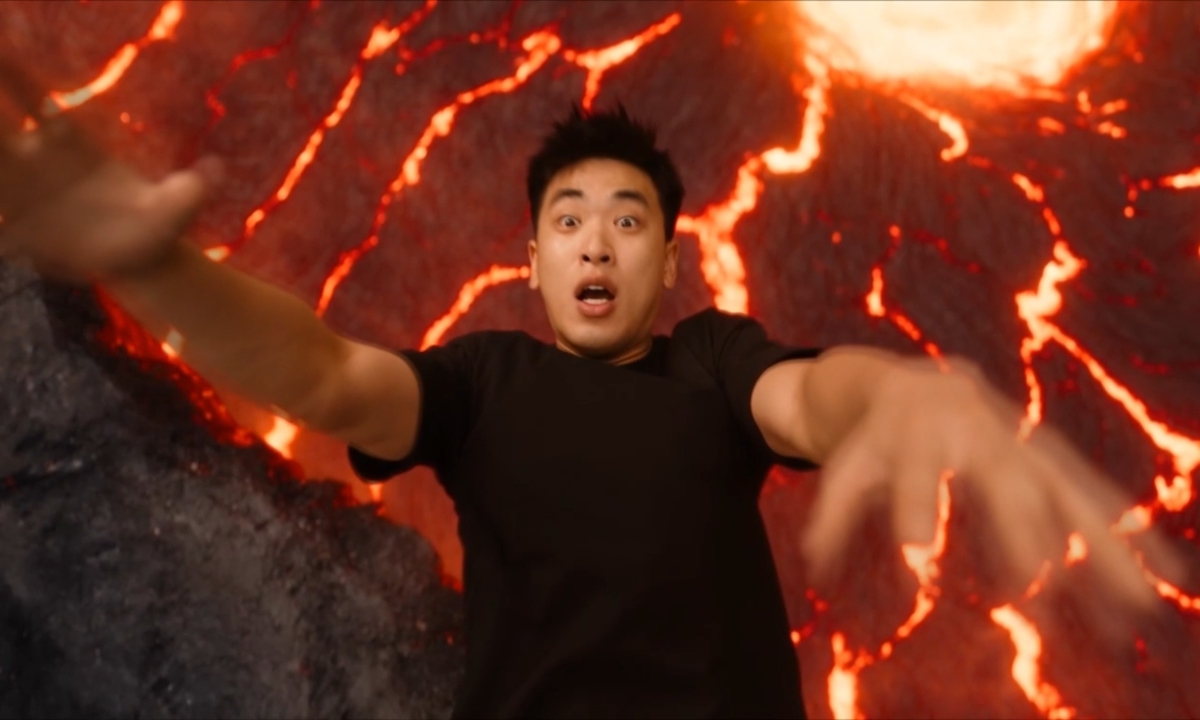
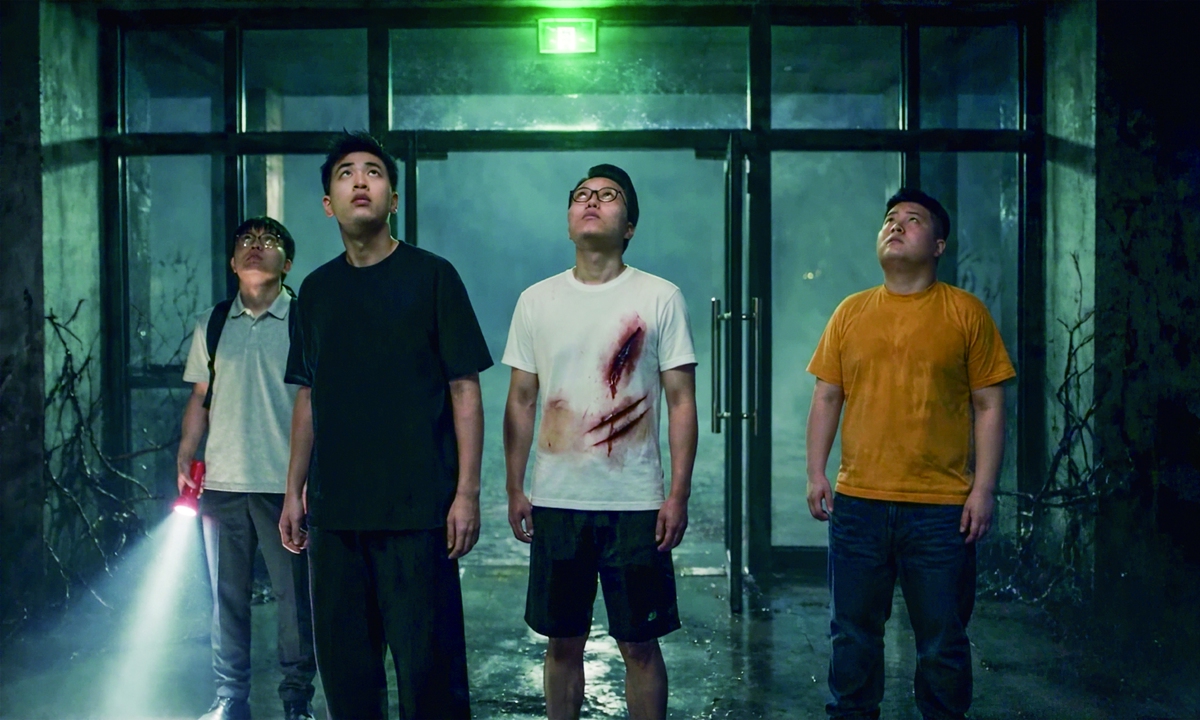
One of the latest hits is The Inverse Zone, an original mystery-thriller about monsters that has been dubbed an AI version of Stranger Things. The series has released three episodes so far, each receiving more than 1 million likes on Douyin.
Yet the team behind it consists of just three people, all born after 2000.
While Hollywood is still catching up with the short drama boom, China's short-drama industry is already moving into the AI era.
For many young creators, AI is not just another tool - it is a door that small teams could never have opened before.
"We've always wanted to make professional film and television content, with visual language, complete storytelling and a cinematic feel," Hu Hai, a member of the team behind The Inverse Zone, told the Global Times. "But the cost and barriers of live-action production were too high. Small teams had little chance to realize high-quality film and television projects."
As increasingly capable domestic AI models emerged, that door began to open. "The maturity of AI creative tools made us see new possibilities," Hu said.
The explosive growth of AI-generated short dramas is a double-edged sword: It opens doors for some, but leaves many in the industry uncertain about what comes next. Many actors who once benefited from the short-drama boom are now finding work increasingly scarce, with some turning to other professions. Meanwhile, the use of celebrities likenesses in AI-generated content (AIGC) has ignited a fresh wave of debate.
Where is the industry headed next? Global Times reporters spoke with AI creators, short-drama actors and industry experts about the opportunities and uncertainties ahead.
Lowering barriers
Hu studied directing and filmmaking in college. His team initially focused on short comedy videos, a field with relatively low production costs and less barriers to entry. But after years of producing this type of content, they eventually reached a creative plateau. That began to shift as more advanced AI tools came onto the scene.
To produce The Inverse Zone, the team used domestic video-generation models Seedance 2.0 and 2.5. The series took nearly two months to prepare, including world-building, character design and establishing a consistent visual style. "Seedance is the best in the world. It's extremely advanced. There's no model in Europe or the US that is more useful than it," Hu told the Global Times.
The technology does not mean production is effortless, however.
According to Hu, a typical episode costs around 4,000 to 5,000 yuan ($593-$741) to produce, while episodes involving large-scale scenes, complex special effects or demanding lighting and rendering can cost more than 10,000 yuan.
The team used AI for image generation, basic voice work and material rendering, while humans remained responsible for the script, character development, cinematography and post-production.
"The soul of the entire series is still controlled by people," Hu said. "All the key creative decisions are manually adjusted and repeatedly reviewed."
Ya Cen, operations head of AI video platform LibTV, told the Global Times that the AI short-drama ecosystem is now characterized by small teams, high productivity and strong individual styles. "The most direct value of AIGC is that it has lowered the geographic and financial barriers to film and television production," she added.
Actors in AI era
Yet the rise of AI short dramas is also creating new tensions.
AI-generated characters are now building fanbases, landing brand endorsements, and being described as the next generation of digital stars. At the same time, many celebrities including Taiwan actress Joey Wong have reportedly given permission for their younger likenesses to be used in AIGC.
The impact extends beyond celebrity likenesses. It is also being felt by people who once benefited from China's booming live-action short-drama industry.
The short-drama boom created opportunities for large numbers of actors, many of whom could quickly become recognizable faces. However, as AI-generated productions expand, some performers are finding fewer acting opportunities and turning to other professions.
Chongqing native Luo Xinyuan, 21, has experienced that shift firsthand.
She spent more than a year in Hengdian, East China's Zhejiang Province as a short-drama actress. Since May, she has worked at a scenic area playing Huang Rong, a character from a classic Chinese martial arts novel The Legend of the Condor Heroes.
"When short dramas were at their peak, there were lots of fast-paced, feel-good stories," Luo told the Global Times. "But that kind of content is difficult to sustain. Without richer and more meaningful stories, the pressure from AI short dramas will make things even harder."
For many short-drama actors, the disruption is likely to be structural rather than an immediate wholesale replacement, Zhang Peng, a cultural researcher and associate professor at Nanjing Normal University, told the Global Times. The question of celebrity likenesses may prove even more complicated.
Zhang warned that unrestricted authorization could raise concerns over control and revenue sharing. Without clearer rules, the technology could put further pressure on ordinary actors.
The next stage may not be a choice between humans and machines, but a new production model in which the two increasingly work together.
For creators such as Hu, that possibility is already here.
"AI has finally given young creators like us the opportunity to realize the film and television dreams we've had for years," he said.
。 "For decades now, the Pacific Ocean can be fairly described as an American lake, in which the US strategic presence is actively supported by the Australian and to a lesser extent New Zealand economic and security presence," says Joseph Camilleri, emeritus professor at La Trobe University in Melbourne.,However, with the People's Republic of China's (PRC) swift economic rise, it's hardly surprising that Beijing has started to explore new possibilities in the Pacific, according to the academic.,"What has particularly troubled the United States and its principal ally in the South Pacific, Australia, is the fact that China is making inroads into what was until now considered to be an exclusive American sphere of influence," he stresses.,On July 13, Vice President Kamala Harris told the Pacific Islands Forum (PIF) in Suva in a virtual address that US funding for the region would be stepped up to $60 million per year for 10 years. The newly announced endeavor includes more funding for fisheries, extra aid, and offers of new US embassies in the Pacific. In particular, the US is set to ink renewed fishing treaties with Pacific island nations allowing US vessels to fish in their exclusive economic zones (EEZ), and offering greater support for maritime surveillance in the Pacific. In addition to that, the Peace Corps – the United States government's volunteer program – will return to four countries, including Fiji, Tonga, Samoa, and Vanuatu, according to CNN.,Australia Welcomes 'Renewed Commitment' From US Towards Pacific, Willing to Work With China11:38 GMT,"The timing of the pledge has much to do with the strategic competition between the United States and China," Camilleri explains. "In recent years, China has made considerable headway in developing its relations with [the Pacific Island Forum (PIF)] board, including cooperation in political, security and regional affairs, aid and development, COVID response and health, Ocean affairs and climate change, and much else.",The US attempt to assert its presence in the Pacific region also comes on the heels of the Quad IUU Fishing Initiative announced in late May, according to Jay Batongbacal, director of the University of the Philippines Institute for Maritime Affairs and Law of the Sea.,The leaders of the Quad nations — Australia, India, Japan, and the United States – proposed a maritime surveillance initiative to establish a tracking system to combat illegal, unregulated, and unprotected (IUU) fishing. The Quad endeavor may be viewed as an extension of earlier initiatives against China's fishing activities in the South Pacific, according to the academic.,"The South Pacific region is presently one of the richest and most active fishery areas in the world," he highlights.,Why Asia Won't Reject Russia's Hydrocarbons or China's Rare Earths Despite US PressureYesterday, 18:54 GMT,Even if Half of Pacific Islands Ink China Pact, It'll be Beijing's Win,Two months ago, Beijing offered a draft agreement between China and 10 island nations spanning policing, security, fisheries, data, and a free trade zone. Some Pacific leaders have agreed to consider China's trade and security pact, while the others have voiced concerns that their rapprochement with Beijing could antagonize Washington.,"The Chinese proposal to establish a China-Pacific Islands cooperation framework agreement may not yet have won sufficient support but I expect that the Chinese side will persist with its proposal, and that it may be happy to proceed with it, even if only five or six Island states are prepared to sing such an agreement," says Camilleri.,Prior to that, in mid-April, the Chinese and the Solomon Islands governments formally signed a bilateral security agreement regardless of the displeasure voiced by the US, Australia, and New Zealand. Commenting on the pact on June 3, State Councilor and Foreign Minister Wang Yi underscored that its purpose is "to assist the Solomon Islands in maintaining social order." He vehemently denied Western media speculation about China's apparent plans to beef up its military presence in the region.,"China has come to the South Pacific region to build roads and bridges and improve the people’s lives, not to station troops or build military bases," Wang highlighted.,© MANDEL NGANUS President Joe Biden meets with China's President Xi Jinping during a virtual summit from the Roosevelt Room of the White House in Washington, DC, November 15, 2021. US President Joe Biden meets with China's President Xi Jinping during a virtual summit from the Roosevelt Room of the White House in Washington, DC, November 15, 2021. © MANDEL NGAN,US-China Competition for Pacific Islands Region Will Intensify,As the US and China's competition for the resource-rich region unfolds, it all depends on what Washington and Beijing can offer to Pacific island nations, according to Camilleri.,"It is doubtful that the paltry sum of $60 million offered by the United States can even begin to match what China is offering, or that it will greatly impress the Pacific Islands States meeting in Fiji," the professor suggests.,Furthermore, China has made substantial progress in building trade relations with the countries of the region as well as in establishing diplomatic ties with the PIF. The People's Republic was first invited to attend the PIF-related Talk on Establishing Dialogue Partnership held in Suva, Fiji, in 1988. Since 1990, China has attended the Post-Forum Dialogue meetings on a regular basis. In 2003, China announced its willingness to further expand economic ties with PIF member countries as well as to provide funding for the forum's secretariat.,"According to official Chinese figures, from 1992 to 2021, total trade volume between China and Pacific Island Countries (PICs) having diplomatic relations with China grew from $153 million to $5.3 billion, registering an average annual increase of 13% and expanding by over 30 times in 30 years. Similarly, by the end of 2021, China’s direct investment in PICs having diplomatic relations with China had reached $2.72 billion," says Camilleri.,The competition between the United States and its allies on the one hand and China on the other will, if anything, gather pace and intensity in the years to come, the professor says, adding that Beijing's advantage is that "it comes to the table with a much bigger checkbook, and greater opportunities for trade and investment, especially in infrastructure projects."。
Current article:http://9aip.ningshunsaotuiqiao.shop/news/20260826_1979.html
Published on:21:50:51
我的网站最近更新
- Tax concessions to Indian firm opposed
- 华为Pura X Max销量突破71万台:10999元起 全球首款大阔折手机
- 【品种策略】玉米:08月26日多家期货公司晨报观点汇总
- 125亿美元!湖人出售价格又创全球历史新高 新旧老板纷纷发表声明
- 北京市发布2026年度各项社保缴费工资基数上下限
- 国新办将举行新闻发布会,介绍中国服务贸易发展和2026年服贸会筹备工作进展情况
- 无良扣款
- 便利店非法拥有和售卖电子烟 烟草零售执照被吊销
- Bihar Government: बिहार सरकार इस जिले में करेगी 279.65 एकड़ जमीन का अधिग्रहण, 66.91 करोड़ रुपये मंजूर
- 重庆银行穿越“K型分化” 一份以质量和效益为中心的成绩单
- 【一线经济观察】河北:深耕文化底蕴 创意赋能文旅高质量发展
- 松辽水利委员会会商部署黑龙江洪水防范应对工作
- A股午评:超4200只个股飘绿,三大指数集体收跌,A股午评:超4200只个股飘绿,三大指数集体收跌
- 第八次参加田径世锦赛,巩立姣依然渴望金牌
- 2025 个人网站创业新方向:跨界融合,解锁多元盈利密码
- 连云港福彩温情援手 助困境学子抗病魔
- 樱桃的最新机械键盘轴Ergo Clear的灵感来自十多年前的爱好者社区
- Here we go!罗马诺:勒沃库森超2500万欧签下吉达联合边锋迪亚比
- UP News: सदियों से आयोजित हो रहा है मेला गुघाल, इसमें आते हैं लाखों श्रद्धालु, इसके बारे में कितना जानते हैं आप
- 海南海口:调整省内各市县来(返)海口人员查验工作
- CyberLeek 再次泄露《GTA 6》实机片段,展示升级版 NPC 模拟系统
- 微软小兵富生、叶秀等五位全职大师还活着
- 两部门对福建启动防汛防台风四级应急响应
- 'Facts No Longer Matter' in Trump Probe Under Politicized Justice System, Ex-FBI Lawyer Says
我的网站热门资讯
- 재신고 받고도 24일 뭉개다 뒤늦게 '허위 종결' 파악…늑장 수색도 헛발질
- 健忘症治好了吗?日本开发新药或恢复记忆
- 世锦赛连爆大冷!2大世界冠军出局,国羽男单全军覆没
- 中心附近最大风力8级 “简拉维”登陆福建泉州
- 水上“大圆桌”亮相 湘湖克鲁兹王莲迎来最佳观赏期
- Applications for US jobless benefits fall to lowest level in more than 8 months
- 大力优化营商环境 加快高质量发展|河北持续推进信用代证、信用修复、信用融资改革
- 外国媒体:Realme3将抵达,或携带4800万像素的照相机
- 重庆忠县打造三峡库区特色中等城市特色产业集群县域样板,重庆忠县打造三峡库区特色中等城市特色产业集群县域样板
- AI brings support to people with disabilities, seniors in east China's Zhejiang
- 大众和福特下周将宣布更深入的联盟:削减开发成本
- 农夫山泉上半年净利近89亿元增16.6%:茶饮料营收增三成 包装水乏力
- 为啥我们至今还没挣脱 “靠天吃饭”?
- 解读ChatGPT Atlas背后的数据边界之战
- 杨郊乡筑牢春季森林“防火墙”
- 8月25日央行开展3860亿元7天期逆回购操作,8月25日央行开展3860亿元7天期逆回购操作
- 红米红米饭注7
- 中国地震局迅即开展四川宜宾市长宁县4.7级地震应急处置工作
- DarYou发布的双引擎鼠标EM925 Pro:ARM处理器,1:1跟踪
- 多部门联合开展“安全生产月”集中宣传活动
- 纳达尔鼓励阿尔卡拉斯:希望没受伤,接下来的赛事全力以赴
- 土耳其拍案而起,通缉内塔尼亚胡!七国发表声明,要求以色列收手,宏兵灼见,原创 土耳其拍案而起,通缉内塔尼亚胡!七国发表声明,要求以色列收手
- Microsoft推出Windows 10 1809预览版17763.288:修复Operations Center错误
- 柯达推出了新的微笑系列产品:两台即时相机和一台打印机